Body
How much sleep do you actually need?
Somewhere along the way, "eight hours" became gospel. It's a fine rule of thumb — but your real number depends on your age, your genes, and above all the quality of the sleep you're getting. Here's the honest version.
Sleep needs by age
These are the widely used expert ranges for a 24-hour period. Think of them as targets, not tests:
| Age | Recommended sleep |
|---|---|
| Teenagers (14–17) | 8–10 hours |
| Young adults (18–25) | 7–9 hours |
| Adults (26–64) | 7–9 hours |
| Older adults (65+) | 7–8 hours |
Notice what's not here: a magic single number. Two healthy adults the same age can genuinely need 7 and 9 hours respectively. Your job isn't to hit someone else's figure — it's to find yours and protect it.
It's cycles, not just hours
You don't sleep in one smooth block. You move through cycles of roughly 90 minutes — light sleep, deep sleep, then REM — five or six times a night. Waking at the end of a cycle feels natural; waking in the middle of deep sleep feels like being dragged up from the bottom of a pool.
Why you can sleep 8 hours and still feel tired
Three usual suspects:
- Timing. Your alarm caught you mid-deep-sleep. That groggy fog is called sleep inertia, and it's about when you woke, not how long you slept.
- Quality. Alcohol, a late meal, a warm room, or a restless night fragments sleep even when the hours look right on paper.
- Inconsistency. Wildly different bed and wake times confuse your body clock, so the same hours do less for you.
Signs you're genuinely getting enough
- You wake up close to your alarm — sometimes just before it.
- You feel reasonably alert through the day without leaning on caffeine to function.
- You don't crash hard mid-afternoon or need long weekend lie-ins to recover.
The boring basics that actually work
- Keep your times consistent — including weekends. This is the single biggest lever.
- Get morning light and dim the lights in the evening to anchor your body clock.
- Cut caffeine by early afternoon; it lingers longer than you'd think.
- Cool, dark, quiet room. Slightly cool is ideal for falling and staying asleep.
- Wind down for 30 minutes without a screen in your face.
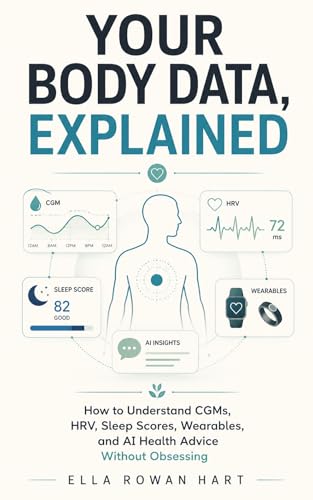
Sleep is your highest-leverage number
Your Body Data, Explained shows how sleep drives your HRV, recovery, and energy — calm and clear, without the obsessing.
Common questions
Is 6 hours of sleep enough?
For most adults, no — it's below the 7–9 hour range that suits the large majority. A rare few truly thrive on less, but most people who "feel fine" on six are just used to running a small deficit.
How much deep sleep do I need?
Roughly 13–23% of the night, and your body self-regulates it. You can't force more directly, but consistent sleep, limiting alcohol, and exercise all help.