Habits
How long does it really take to build a habit?

You've probably heard it takes 21 days to build a habit. It's one of the most repeated pieces of self-help advice going — and it's essentially made up. The real answer is more forgiving, and more useful.
Where "21 days" came from
The number traces back to a 1960s plastic surgeon, Maxwell Maltz, who noticed patients took about 21 days to adjust to a new nose or a missing limb. That's it. A casual observation about adjustment, repeated for sixty years until it hardened into a "rule" about habits it was never about.
The real number
The most cited actual study on this followed people forming everyday habits and found it took a median of around 66 days for a behaviour to feel automatic — with a huge range, roughly 18 to 254 days, depending on the habit and the person. Drinking a glass of water after breakfast becomes automatic quickly. A daily workout takes a lot longer.
The lesson isn't "66 days." It's that habits take longer than a motivational quote promises — and missing the deadline doesn't mean you failed.
Why time isn't really the point
Counting days is the wrong game. What determines whether a habit sticks is how it's designed. The people who succeed aren't more disciplined — they made the habit easier to do than to skip:
- Make it tiny. Two minutes. One page. One push-up. Small enough that a bad day can't stop it.
- Anchor it. "After I pour my coffee, I…" A habit needs a trigger more than it needs willpower.
- Shape your environment. Make the good thing obvious and the distraction inconvenient.
- Vote for an identity. Each rep is proof of who you're becoming, not just a box ticked.
- Never miss twice. One miss is life. Two in a row starts a new pattern. Get back the next day.
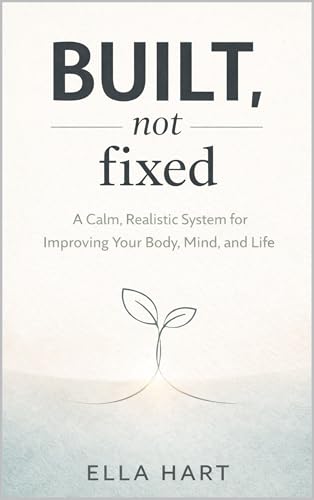
Built, not fixed
Built, Not Fixed is a calm, realistic system for change that holds up on the days you don't feel like it.
Common questions
Does it really take 21 days?
No — that's a myth from a 1960s surgeon's note. Real habits take a median of about 66 days, with a wide range depending on difficulty.
What if I miss a day?
One miss barely matters. The rule is never miss twice — get back to it the next day, no guilt, no starting over.